 Drea
Standing in my San Diego bedroom surrounded by piles of clothes, trying to figure out what to pack for 18 days in Japan, I had a revelation: I wasn’t packing for one trip – I was packing for three different climates, countless temple visits, mountain onsen soaks, and 20,000 daily steps through Tokyo’s massive city blocks. On top of that, it all needed to be a nice little suitcase that I could easily carry on planes, trains and automobiles (and fit in compact Japanese hotel rooms.) As someone who likes to have a few extras on hand just in case, I had my work cut out for me.

In this Japan packing guide, I’ll share my proven 431 packing system, my real luggage strategy that survived 18 days across multiple Japanese cities, and exactly what worked (and what I’d avoid) for spring’s unpredictable weather – plus what I’m packing for my upcoming 2026 trip. I’ve used this system everywhere from Peru to Iceland – Japan just happens to be the most demanding test case, with its temple dress codes, compact hotel rooms, and 20,000-step days.
Whether you’re visiting during unpredictable spring weather, humid summers, ideal fall temps, or snowy winter onsen season, Japan’s unique combination of temperature variations, compact hotel rooms, stairs-heavy train stations, and shoe-removal culture requires strategic packing.
For my full guide to planning and traveling through Japan, start here →
📦 What luggage to bring: Carry-on roller (~22″) + backpack + crossbody + packable duffel
🎒 Best packing system: 431 method (3 base layers, 3 top layers, 3 bottoms, 3 shoes + 1 travel outfit, PJs, jacket, swimsuit + seasonal specialty items)
👟 Shoes strategy: 2 pairs comfortable walking shoes (rotate daily!) + weather boots + onsen flip-flops. All must slip on/off easily.
🧴 Toiletries approach: Bring your basics. Shop for full-size souvenirs, not Day 1 necessities.
🙏 Cultural packing tips: Easy on/off shoes (temples!), modest attire, presentable socks
🌡️ What to pack when:
- Spring (45-75°F): Layers, rain jacket – unpredictable weather
- Summer (80-95°F): Quick-dry fabrics – extreme humidity
- Fall (60-75°F): Light layers – ideal temps, crowds
- Winter (30-50°F): Warm coat, base layers – varies by region
👇 Keep reading for my complete 431 system breakdown and seasonal strategies.
Want Your Own Custom Packing Checklist for Japan?
You’re about to read the whole method, now grab it as a customizable checklist you can actually pack from. Pop your email in and it’s yours, free.
My Japan Luggage Strategy (That Actually Works)
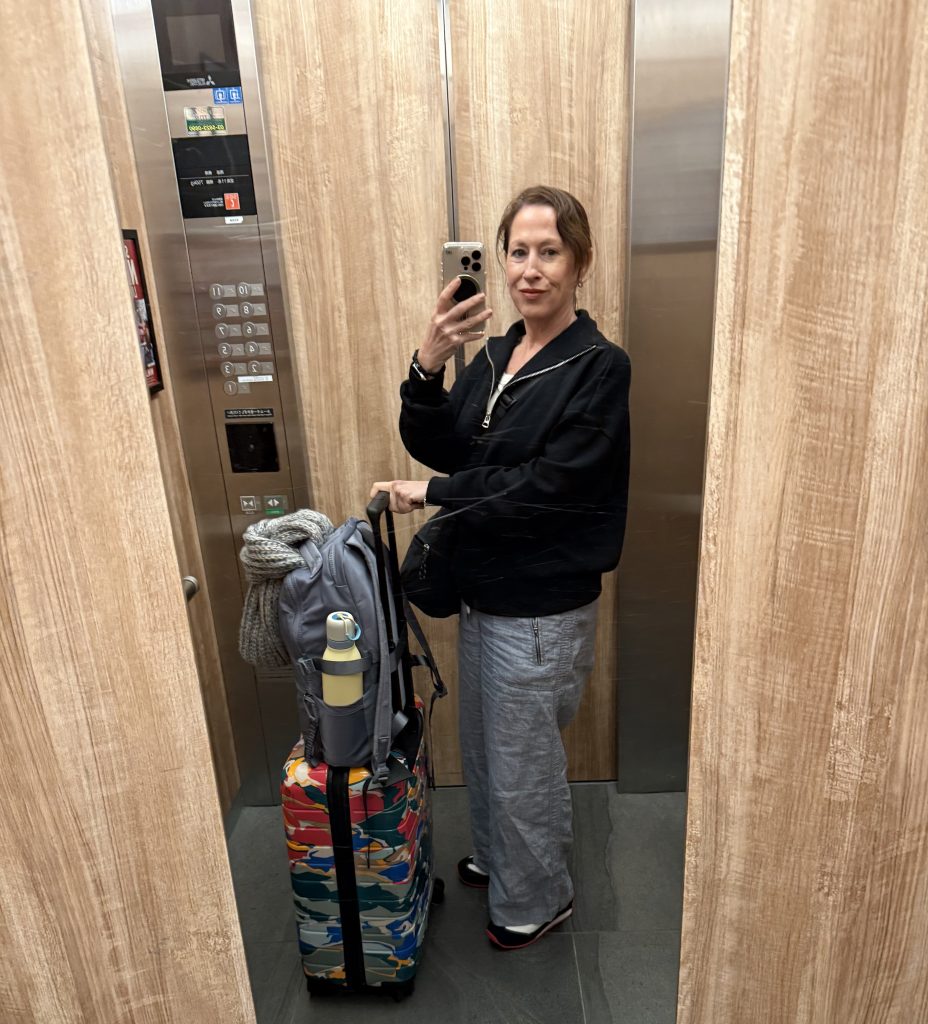
How much luggage you bring depends partially on how you want to travel. If you’re visiting only one city, taking private transport or taxis, and have confirmed you have a larger hotel room, then bring all the big bags you want! If you’re like me, though, visiting multiple cities and navigating public transport, you’re going to want a system that eliminates any additional stress during your travels.
Here’s What I Brought
For my trip to Japan, I employed a 4-bag system that allowed me to handle train travel solo (as a 5’1” petite lady), avoided the stress that comes with dealing with large luggage and little luggage space, and left plenty of room for purchases to bring home.
My 4-Bag System
1. Carry-on Size Wheeled Bag
I went with the largest carry-on size (~22”), as it was easy to navigate on trains, I knew I could lift it when needed, and it nestled snuggly on the floor of my hotel rooms. A lot of people prefer to carry their bag on the flight over, but I checked it as I don’t want to stress about finding overhead room, making a tight connection, etc. I did carry a pair of clothes and my meds in my backpack just in case, but luckily my bag arrived just fine.
2. Backpack
I travel with my laptop, kindle, water bottle, and the like. I prefer a backpack over a tote as I can easily use this on hikes and shopping days around town. It also leaves both hands free on travel days when I’m also pulling my roller bag along.
3. Crossbody Purse
On shorter jaunts around town, a crossbody bag works great. It’s large enough for a small bottle of water, my purse, phone, and wallet. It also fits nicely in the backpack on travel days if needed, to minimize looking like a bag lady! While Japan is safe, I always keep this in front of me with my arm over it, just in case. It’s a good habit to have regardless of where you go!
4. Packable Duffle (Tucked Inside My Main Suitcase)

You’ll hear a lot of people recommend bringing an extra bag or buying a suitcase while there for all the things you’ll buy. While I think buying a whole new suitcase may be overkill (unless you’ve been on the hunt for one), having an extra bag is very smart. I brought a small packable duffle you wouldn’t even know was there. It was perfect for the end of the trip, as I transferred all my clothes to the duffle and kept my Japanese souvies in my hardshell bag so they wouldn’t get damaged during the journey. I checked both at the airport, and was reunited with them when I got home!
Planning your days in Japan, not just your bag? My 2–3 week Japan itinerary walks through exactly how to structure your time, including which cities to pair together and how to plan for all the train-hopping this packing system is designed for.
Why This System Works
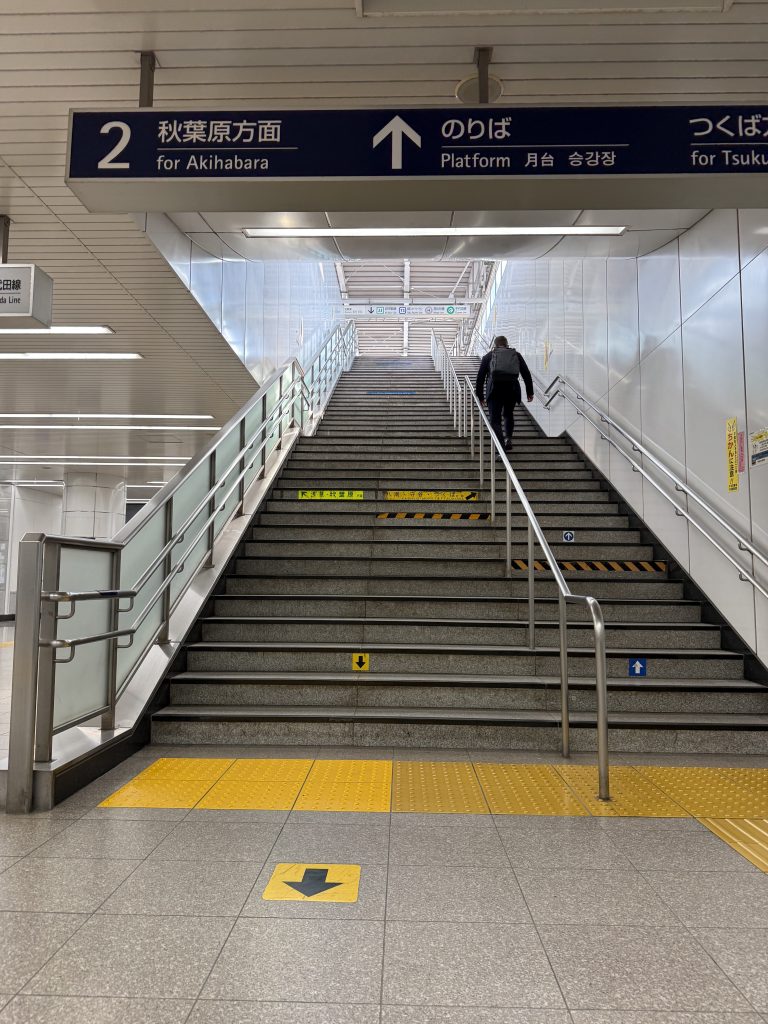
Japan’s train stations have a lot of stairs (not always escalators or elevators), bullet trains have limited overhead storage, and hotel rooms are compact. Large suitcases mean struggling up stairs, special train reservations, and rooms too small to fully open your bag. I wanted mobility, not stress.
For all of these reasons, I find Japan much easier to travel around with a smaller bag that I can lift, roll, and keep at my feet if necessary. Navigating a foreign country’s public transit can be stressful enough – I don’t want to complicate that with cumbersome luggage!
As I saw other people with huge bags, hunting down elevators and stressing to find room on trains, I was empathetic for their plight, and grateful that I wasn’t among them. The effort it took to pare down my packing was paying off.
The 431 Packing System (My Secret Weapon)
How the 431 Packing System Works
I developed the 431 system after a two-week Peru adventure where luggage space was tight. Think of it as a framework to help you edit down, not a rigid formula. Minimalists swear by the 222 system, but I’m not quite that hardcore. The 431 gives me just enough variety to feel put-together without overpacking. Here’s the core framework:
Start with 3 of each in these categories:
- 3 base layers (tanks, tees)
- 3 top layers (sweaters, cardigans, long-sleeves)
- 3 bottoms (pants, skirts, or dresses)
- 3 pairs of shoes
Add your essentials:
- 1 travel outfit
- 1 set of pajamas
- 1 jacket
- 1 swimsuit
Don’t forget:
- Underwear, socks, bras (pack what you actually need!)
- Specialty items based on your trip
The key? Stay within one color palette so everything mixes and matches – you can create 20+ outfit combinations with just these pieces.
For my 18-day spring Japan trip, here’s what actually made it in my bag:

- 3 bottoms: tan jeans, linen pants, black travel pants
- 3 layered top combos: tank top/tees with cardigans and sweaters
- 3 pairs of shoes: tennis shoes, ankle boots, onsen flip-flops
- Plus: long dress with tights, rain coat, packable down jacket, hat, gloves, scarf
The 431 framework kept me from throwing in 5 pairs of jeans “just in case” – and everything I packed got worn.
Regardless of the season or location, this is a great guideline to help me edit my wardrobe down to things I’ll actually wear and get use out of.
Packing Cube Strategy

I love a packing cube. I found them in 2014 and haven’t looked back. For this trip I had 2 large cubes, 1 medium, and 1 empty. I used one large one for day outfits, one for night outfits and outerwear, and the medium for pajamas, swimwear, etc. The empty one I used for clothes once I was done wearing them, so I could keep my ‘dirty’ clothes separate from the ones that were still in rotation – yes, with 18 days and one small carry-on, clothes are definitely getting used more than once!
Japan Packing Essentials (for Every Season)
There are some things you’ll want to pack regardless of the season you visit. These evergreen items will make your travels go a bit more smoothly.
Cultural Considerations That Impact Packing

You’ll likely be visiting temples and shrines during your visit, and you may find some restaurants and ryokans require you remove your shoes before you enter. If you have shoes that are hard to get on and off, or ones with intricate laces, you’ll quickly get frustrated at the time you’re taking to enter/exit a location. Based on that, go with shoes that can slip on and off easily – no-tie/easy-to-tie tennis shoes, boots, etc.
Because your shoes will be off, you’ll want to make sure your socks are on point. It’s rude to have holes or dirty socks, so make sure these are clean and presentable.
Japanese culture varies by area, but overall tends to be a bit more conservative. Think looser clothes, more neutral colors, smarter wear (nice pants instead of holey jeans) and not revealing (low necklines exposed middrifts and the like.) Of course, you’ll see tourists wearing all sorts of clothes, and even younger Japanese wearing all kinds of fun outfits. My preference is to do what I can to NOT stick out like a tourist. For me, that meant packing loose clothes with a neutral color palette, and sticking to items that looked a little more put together but were still comfortable. My matching sweat suits were left at home, but my travel pants and sweaters were a perfect fit.
Japan is genuinely one of the safest countries I’ve traveled — but it’s worth understanding why and what to stay aware of. If you’re headed to Tokyo solo, my honest guide to Tokyo safety for women covers what’s real and what’s overhyped.
The Absolute Essentials
Must-Haves I Used Daily
Beyond clothes, there are a few must-haves you’ll want to have on hand.
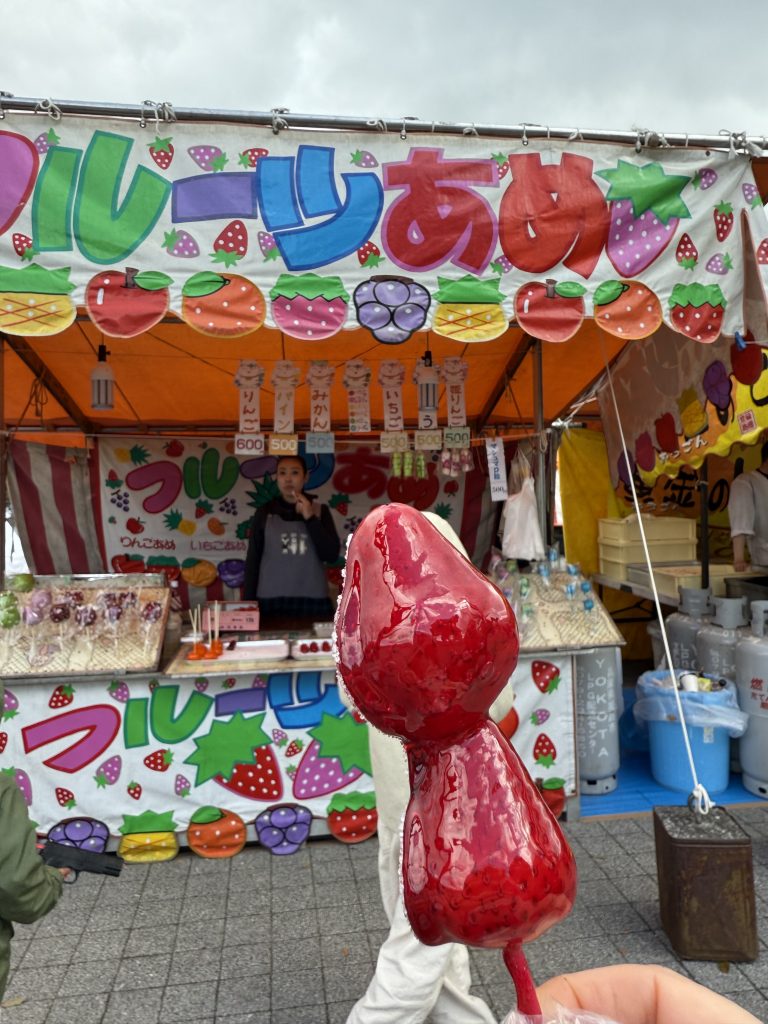
- Coin purse: Japan loves cash, and while I swiped my SUICA card and used my credit card quite a bit, coins were the thing I was always on the lookout for. From buying food at street markets, to playing in the gacha machines (vending machines that dispense all sorts of fun items), or making donations at shrines, coins were critical. Because of this, it was helpful to have a small coin purse that was easy to get to.
- Comfortable Walking Shoes: I averaged 20k steps a day, sometimes more, sometimes less. Making sure you have comfortable walking shoes is key to wanting to walk again the next day. I recommend bringing 2 pairs to rotate, so your feet have a chance to breathe and not get constrained by one pair the whole time.
- Small Dayback/crossbody bag: Part of my bag system I mentioned above, I used the backpack when I knew I’d have shopping bags I could consolidate inside; and the crossbody bag when I needed less space.
- Portable Phone Charger: Using Google Maps consistently really drained my battery, so having a portable phone charger was key. It allowed me to top up in the afternoons, ensuring I had enough juice to find my way home each evening.
- Travel-Size Laundry Soap: I mainly washed at one of our hotels with laundry facilities, but having a little soap on hand was great for delicates and socks that I could wash in the sink without requiring a full laundry load.
Heading to Kyoto? It’s where the shoe-removal culture is most constant – shrines, temples, and traditional restaurants all day. My 4-day Kyoto and Nara itinerary covers what to expect so you can plan your days (and your footwear) accordingly.
Toiletries Reality Check

Contrary to popular advice saying “don’t bring toiletries,” I’m a skincare junkie who doesn’t want to waste vacation time shopping for basics. Yes, Japan has amazing products, and yes, your hotel likely has some toiletries available, but if you’re particular, why risk it? After 20+ hours of travel, the LAST thing I wanted was a drugstore shopping mission before I could wash my face and crash.
What I Brought:
- Travel sizes of my essential skincare: hydration mist, serum, moisturizer, SPF
- Sample sizes when possible: can throw away the packets as you go, lightening your load a bit
- Deodorant: Japanese versions are much milder
- Basic makeup and hair products: I pared this back quite a bit, and just brought basics for a simple routine.
For more on this, check out my article on 10 Things to Avoid in japan.
🛁 Quick Note on Onsen Essentials
If you’re visiting onsen (Japanese hot springs), here’s some hints on what (and what not) to pack:
- Most provide toiletries – no need to bring those
- Bring hair ties for keeping hair up
- Small bag for carrying items to shared baths
- Band-aids if you have tattoos – public baths do not allow tattoos to show, but may allow covered small tattoos
What to Pack for Japan in Spring (March–May)
Spring Weather is a Wild Card

Perhaps the most popular time to visit is Spring, as it’s sakura (cherry blossom) season! Part of the excitement of getting the timing right to see the blossoms, is figuring out what the temperature will actually be. When I went in late March, it snowed in Tokyo the week before I arrived, then it was 75 one day, 55 the next. Up in the mountains, we got more snow and rain in April, and I was glad I had packed my warmer layers. Typical spring temperatures have quite the range:
- March: 45-60°F (legitimately cold)
- April: 55-65°F (cherry blossom peak, variable)
- May: 65-75°F (warming up, rain increases)
Cherry blossom dates are never exact – Mother Nature doesn’t follow tourism calendars. I share more about this (and why it’s okay) in my 10 Things to Avoid in Japan.
What I Actually Wore in Spring

My Go-To Outfits:
- Layers upon layers: Light jacket over cardigan or sweater, over tank top or tee that could all mix and match
- Comfortable pants tan jeans, linen pants, and black travel pants
- Travel outfit for there and back
- Additional pieces:
- Long dress with tights (temple-appropriate, comfortable for walking)
- Light scarf (morning chill, temple shoulder coverage, style)
The Shoe Situation – What I initially packed:
- Tennis shoes (wore constantly)
- Ankle boots (great for rainy weather)
- Flip-flops for onsen
- Slippers – though most hotels had these
The game-changer: With 20,000 steps daily, I bought a second pair of tennis shoes in Japan to rotate with my first pair. Best decision ever – my feet were SO much happier alternating shoes. For future trips, I’d bring 2 pairs of walking shoes from the start, plus boots for weather variety.
Spring-Specific Essentials
- Light rain jacket (April showers happened) – I went with a lightweight long trench
- Compact umbrella (recommend getting this there – such cute and compact styles!)
- Layers that actually work (not just fashion layers)
- Down jacket, hat and gloves for mountain visits (we got caught in snow!)
What to Pack for Japan in Summer (June–August)
Summer = Hot + Humid (Not Just Hot)

Ready for a hot and sticky Summer? The key here is to prepare for heat outside, cool temps inside due to AC, and potential rain. All while being culturally appropriate and respectful. Temperatures in the summer can be 80-95°F with 70%+ humidity. While I visited in spring, friends who’ve braved summer humidity report that everyone sweats – and quick-dry fabrics are non-negotiable. Here’s what I’d pack based on their experiences and my spring heat days.
Summer Clothing Strategy
I’d use the 431 system to pack for summer in Japan, and swap out items to have breathable everything:
- Loose, flowy fabrics: fitted clothes = misery
- Quick-dry materials: can dry from rain and humidity, and makes it easier to rinse them in the hotel
- Tank tops/short sleeves: BUT still temple-appropriate
- One light cardigan: over-air-conditioned trains, draped when in a temple
- Shawl: can use on shoulders in temples in place of the cardigan
- Lightweight pants and long skirt options for temples
Footwear:
- Comfortable sandals: Birkenstock-style, sandals that can clock those 20k+ steps, not flimsy flip-flops
- One pair closed-toe tennis shoes for longer walking days
- Onsen flip-flops
Summer Essentials
- Small towel (locals carry these—you’ll understand why) – I bought one while I was there, as they have such fun designs!
- After-sun gel
- Hat with brim
- Cooling towels – can also find these in the konbinis there
What to Pack for Japan in Fall (September–November)
Fall = Peak Japan Season

If you can swing it timing-wise, fall might just be your perfect Japan season. Fall is another popular time to visit, and the weather is perfect. My parents visited this fall, and they confirmed that fall foliage season (late October-November) brings crowds similar to spring’s cherry blossoms, but the views are stunning, and the temperature is just right.
Weather-wise, you get consistent 60-75°F temperatures, a peek at that stunning fall foliage, and can stay comfortable during all-day explorations.
Fall Clothing Strategy
Packing for fall in Japan uses the same 431 system as spring with a few smart swaps:
Spring pieces that work for fall too:
- Tank tops and cardigans for temperature flexibility
- Comfortable pants (jeans, travel pants)
- 2 pairs of tennis shoes (rotating is even more important with fall’s longer temple days)
- Onsen flip-flops
- Light rain jacket for occasional showers
Where fall differs from spring:
- Swap heavy sweater for second lightweight cardigan (consistent temps mean less extreme layering)
- Add another long skirt option (comfortable for all-day sightseeing)
- Trade boots for that second pair of tennis shoes (temps won’t dip as low as spring)
- Skip the down jacket and winter accessories (unless heading to mountains)
The fall packing advantage: Fewer temperature swings mean less ‘just in case’ packing – fall is the easiest season to pack for.
Fall-Specific Considerations
What to Pack for Japan in Winter (December–February)
Winter in Japan Varies By Region
My mom and I are considering a trip back to Japan next year, so we’ve been looking at winter temps. Similar to spring, these can vary greatly by region.
- Tokyo/Kyoto: 30-50°F (cold but manageable)
- Mountain onsen towns: Below freezing, snowy
- Generally dry (less rain than other seasons)
What I’m Packing for Winter 2026 in Japan

We’re planning a shorter visit, and only staying in Tokyo and a mountain onsen town. While only two cities, it does require packing for city exploration and snowy hot spring visits.
My clothing plan? The 431 system is back again. Using spring as my base again, I’d warm up my top layers and switch to thicker bottom layers, swapping out linen pants for heavier pants. The down coat, hat, gloves and scarf definitely stay too, as would thicker socks and snow-proof boots.
The Uniqlo Stop Strategy: Rather than packing bulky base layers from home, I’m planning to hit Uniqlo once we arrive in Tokyo. Their Heat Tech is superior, takes up less packing space when purchased there, and leaves room in my luggage for the trip over.
Planning for winter means balancing my lack tolerance for cold vs. my mom’s – I need layers she probably won’t touch!
What I Didn’t Need (But Almost Packed)
Here’s what almost made it into my suitcase but would’ve been dead weight:
Leave These at Home
- Excessive “just in case” outfits – between my small bag and my packing system, I ensured I didn’t overpack, and I happily wore each thing I brought
- Hair dryer – hotels provide
- Multiple statement pieces – neutral, versatile items are better; japan culture in Tokyo is more neutral palette, so staying in that zone helps you blend in a bit
- Too many bags
- Complicated shoes
- Guidebooks – phone apps work great
Japan Has Everything You Need
If you forgot something, not to worry. Japan has you covered.
- A lot of hotels offer several amenities downstairs, just ask
- 7-Eleven, Lawson, Family Mart konbinis are everywhere – you can get your basics 24/7
- Drugstores (Matsumoto Kiyoshi, Sundrug) = amazing products
- Laundry facilities available in many hotels
- Can shop if you forget something
For more on konbinis and which drug stores to visit, take a look at my Essential Japan Tips and my Things to Avoid in Japan articles.
FAQs
Conclusion
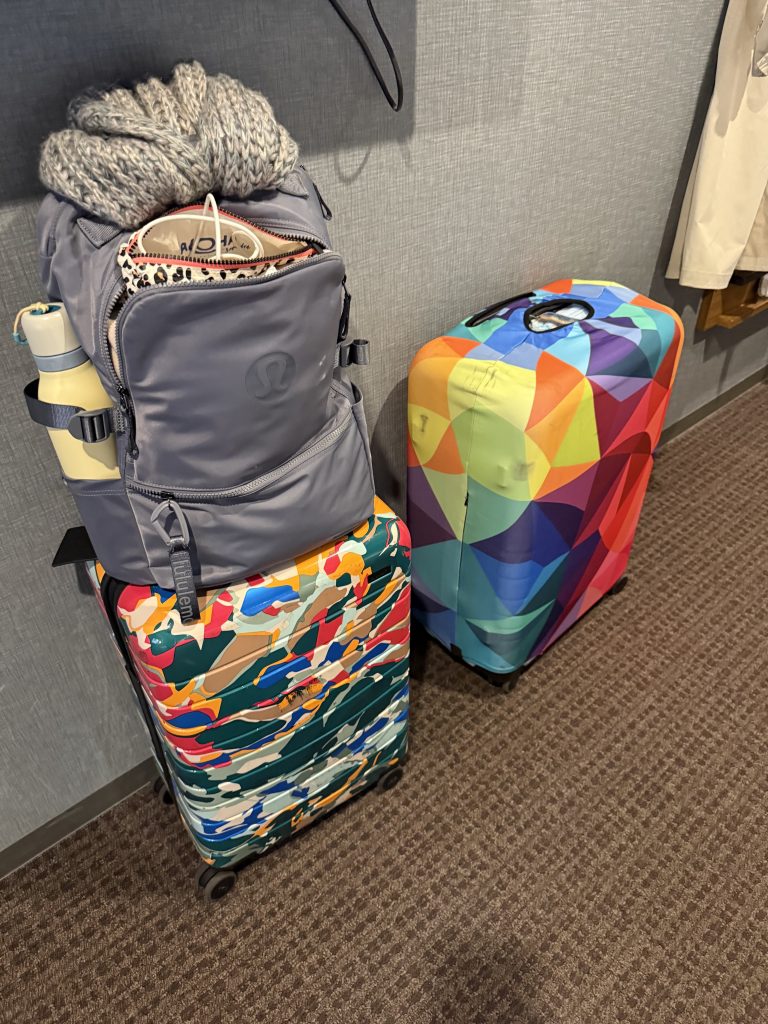
Standing in my bedroom now, planning my return to Japan with my mom, I’m looking at my suitcase completely differently than I did before my first trip. No piles of “just in case” outfits. No stress about forgetting something critical. Just the 431 system, my trusty 4-bag setup, and the confidence that comes from knowing exactly what works.
That’s what I want for you, too. Not a generic packing list that makes you second-guess every item, but a system that actually works when you’re navigating Kyoto train stations or rushing to make a Shinkansen connection.

The real magic of this system? It works everywhere. I’ve used it from Peru to Iceland. Japan just happens to have the bonus challenge of train station stairs and temple shoe removal.
Ready to plan your Japan trip but feeling overwhelmed by all the details? I offer personalized trip planning to help you nail the logistics – from where to stay to how to structure your days – so you can focus on soaking in the temples, the food, and those magical moments that become your favorite travel memories. Let’s chat about your trip.
Wherever you go, however you pack, I want you to make it a trip worth remembering.
Happy travels, kindreds!
RELATED POSTS
Ready to travel to Japan? Here are some articles to help you out.
- For my full guide to planning and traveling through Japan, start here
- Complete Japan Itinerary: 3 Weeks for First-Timers
- My 5-Day Tokyo Itinerary for Solo Travelers
- Only have 3 days to spare? Take a look at My Exact 3-Day Tokyo Itinerary
- 4 Days in Kyoto + Nara – Perfect Solo or With Friends
- Top 10 Essential Japan Travel Tips for First-Time Visitors
- Once you know the best advice, check out the the Japan advice I think is overrated
- Wondering is Tokyo Safe for Solo Female Travelers?
- Solo Female Travel hub for all your solo travel needs
- Are you heading to Japan with your family? Check out my article on Multi-Gen Travel Tips.
- Considering a mother/daughter getaway? Take a look at what I learned traveling with my mom.
HELPFUL LINKS
Ready to book? Here are my go-to resources for flights, packing, planning, and staying connected:
- Work With Me
- Need help planning your 2026 travel? Contact me here for personalized itinerary assistance!
- Want more information on the benefits of using a travel advisor? Learn more here
- Before You Go
- For my favorite luggage I used to navigate Tokyo’s train stations: https://www.awaytravel.com
- Airalo eSim – was key for using my phone while not paying for crazy international charges. Made using google maps, making reservations, etc easy and cost-effective: https://www.airalo.com Promo code: ANDREA68732 for $3 off
- Planning Resources
- Japan National Tourism Organization – Official resource for Japan
- travel.state.gov: security alerts, visa and entry requirements for US citizens
- Great app for Japanese events and booking (found a cool cherry blossom event here that I didn’t see anywhere else): https://www.klook.com
- Hotel and activity comparison: https://www.tripadvisor.com
- Event and car bookings: https://www.viator.com
- How to Get There
- Group travel: I did part of this trip with Intrepid, a small group tour company, and highly recommend them! https://www.intrepidtravel.com
- Custom trip planning: Need help planning your Japan adventure? Contact me here for personalized itinerary assistance!
- Looking for Travel Inspiration? Follow me and check out my boards on Pinterest