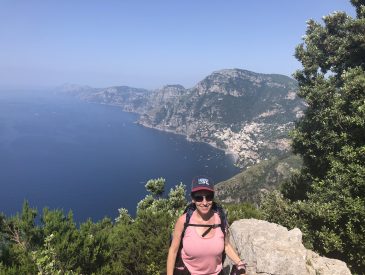
Drea
There I am, standing in the middle of Chamonix after three months traveling solo through Italy, surrounded by stunning snow-covered mountains in the middle of summer, about to commit to hiking 165km around Europe’s highest mountain with 11 strangers. After three months traversing through Italy, debating whether or not I was up for this specific adventure, I had bit the bullet and signed up for a guided trek to hike the Tour du Mont Blanc, an 11-day, 165km trek with 10,000 meters of elevation gain through the France, Swiss and Italian Alps. Arriving a couple of days before the tour was to commence, I had that familiar combination of excitement and “oh mylanta, what have I gotten myself into?”

Here I’ll share the real deal – my fears, what went right, what surprised me, and what I wish I’d known. I’ll also talk through why I chose a guided trek vs self-guided, and how this trip symbolized so much more than just another challenging hike. The moments, the scenery, the energy stays with me to this day, and there’s a good reason why.
Every Extra Ounce is One You Carry Up the Mountain
On a multi-day trek, your pack is your whole world, and lighter is always kinder. My free custom packing checklist keeps it honest.
📌Quick Navigation
What Is the Tour du Mont Blanc, Really?

If you’re not familiar with the Tour du Mont Blanc, I’ll break it down for you. The route is 165km (102 miles) circling Mont Blanc through France, Italy, and Switzerland, with a cumulative 10,000 meters of elevation gain and loss – that’s higher than climbing Mount Everest from sea level. There are 5 major passes you hike through, with the highest point at Grand Col Ferret (2,537m/8,323ft). Many people hike counterclockwise, but our trip went clockwise, which allows you to ease into the hike and have some strenuous stretches as downhill vs uphill climbs.
The Alps are notorious for well-defined trail markers and a connected trail system, making it easy to decide how many days you want to accomplish the trek in, and whether you want to complete the full loop. Plenty of people do a day or two just to get a taste. Others may do the full circuit but at a faster or slower pace, so you’ll see trips of all lengths. My specific trip was 11 days, which was a challenging but doable pace to make our way around that big beautiful mountain. That’s the beauty of a Tour du Mont Blanc guided trek – someone else handles the logistics while you focus on the hiking.
Why I Chose a Tour du Mont Blanc Guided Trek (Even as an Experienced Traveler)

The trail system winds through plenty of small towns and lodges that you can hike through each day. This, coupled with the easily identifiable trails, makes it very easy for through-hikers to go solo. Many tour operators will even outfit you with maps, apps, and lodging so you don’t have to worry about logistics and can go at your own pace. My friend and I were considering this, but when she had to back out for personal reasons, I decided to go with a small guided group. I love my solo time, but navigating mountain trails for days on end solo is just not my idea of a good time.
I went with Salamander Adventures, a reputable outdoor adventure company that takes groups of 14 people or less. They handle logistics, luggage transfer on most days (we had to hike through with extra clothes and sleeping gear, but our larger luggage was taken care of).
After traveling solo through Italy for three months, researching and planning every detail, it was nice to just show up and let them do the logistical work while I could focus on the physical work of the hike. It also helped to have lovely hiking companions to chat with on the trails and back in the lodges in the evenings.
Finding the Right Tour du Mont Blanc Guided Trek Company

You know I love to plan travel, so you can only imagine the research I put into choosing the right Tour du Mont Blanc guided trek. I looked at 20+ ways to do this hike, 20+ outfitters that would help self-guided and group-guided trips, and created a master comparison of them all. A lot of them had similar offerings, and many were reputable. Ultimately, I landed on Salamander Adventures for a few reasons.
Length of Trip
This trip was 11 days, vs 14 days or 8 days on others. For me it was a good amount of time to traverse the full circuit, without short-changing some of the highlights of the trek.
Group Size
If you’ve read my travel stories before, you know I prefer a small group. Salamander fit the bill here with 14 people or less.
Route

I liked the specific locations this trip Mont Blanc hike stopped at. Reviews had mentioned that some of the refuges/refugios (mountain huts) weren’t that great, so I was pleased that this trip avoided those, favoring spots with better reviews instead. I also liked the counter-clockwise aspect, differentiating it from the others. Lastly, I wasn’t mad that the ladder portion of the climb was optional in this trip, as that gave me a bit of trepidation (unnecessarily, as it turns out – but we know how the mind can work!).
Price Point
Salamander Adventures was quite affordable, given lodging, transfers, cable cars, most meals, and airport transfers were included. Other operators offered similar routes, at similar or the exact same hotels, for much more.
Quality
Quality didn’t suffer with the lower price, as they had reputable, IML certified guides, who provided amazing knowledge along the way.
Gear
While I like a bit of backpacking, I appreciated the mix this trip offered of backpacking and day hiking. About half of the nights we had our main luggage waiting for us, and others we hiked with sleeping gear, a change of clothes and our snacks and water for the day. This was a nice mix between hotel living and roughing it for me (though most of the lodges didn’t really feel like roughing it – more like rustic stays).
The Accommodation Reality Check

Building on this, along the Tour du Mont Blanc circuit you can find hotels, private lodges, and mountain huts/refugios. You can even camp in tents if that’s your jam. For our Salamander Adventures trip, we mainly had hotel stays, which meant private rooms with a warm bed and a hot shower at the end of each day. Hallelujah! We did twin-share rooms so I had a roommate, and luckily we got along fantastically. It was a nice way for us to unwind and have some quiet time at the end of each day.
We stayed in a couple of auberges, offering half-board options. Here you’re not in a town but out in the mountains. In Le Chapieux, we had a shared room with four people, shared bathrooms in the corridor, and dinner included in a rustic room downstairs. It reminded me of hostels back in the day. I didn’t mind doing this a few times, but again enjoyed the balance and mix of hotels, mountain huts and auberges.
What “Most Meals Included” Actually Means

You’re on a multi-day hike, you say, so how and where do these meals actually come into play? Turns out it was quite lovely. Some of my favorite memories are of us finding spots to take off our packs, lay out our fresh finds from the market that morning, and enjoy our meal among nature. One day we were lucky enough to stop at a lodge while cows were coming through, roaming our path while we imbibed on the local beer before the second half of our day.
Here’s a run-down of how the meals worked out:
- Breakfast: standard European breakfast (coffee, bread, jam, cereals) at the hotel
- Packed lunches: we’d stop at the market and buy ingredients for sandwiches – fresh baguettes, cheese, cold meat, and fruit
- Dinners: 3-course meals were included on 6 of the 10 nights (budget accordingly) either at the hotel or a nearby restaurant
- The 4 nights my own I dined with other hikers in the towns we were staying in
- Drinks were never included, so factor this in – you must try the local beer, the genepi (green) beer, and of course, you can’t go wrong with wine in France or Italy
The Day-by-Day Reality: What the Itinerary Doesn’t Tell You

Knowing you’re about to hike over 100 miles in ~10 days can be a bit daunting – particularly if you’re like me and instead of training for this type of hike for the past three months, you were training for a pasta eating and wine drinking contest. Yes, I walked a TON while living in Italy, and I had done the Amalfi Coast hike a couple of months earlier, but being a planner, I’d typically put more time into training for a trip like this. That’s part of why I was hesitant to sign up. Would I be fit enough? Was I ready? Could I handle it? Luckily the answer was yes.
My Day-by-Day Tour du Mont Blanc Hiking Itinerary
The Easier Early Days (Days 2-5)
We met in Les Houches, but started our hike in Chamonix. After stopping for lunch supplies at the local market, we headed up into the green hills under a stunning bright blue sky. These first few days were filled with warm weather, gorgeous green hills and colorful wildflowers everywhere we looked. While we weren’t there in peak wildflower season, we definitely got our share.

We combined hiking with a cable car now and again, giving us views from above while also giving our feet a rest. There were so many magical moments. Seeing Lac Blanc filled with the most clear water. Spotting Mont Blanc herself for the first time, all majestic and proud. Crossing from France into Switzerland, a milestone moment we’d celebrate at each country crossing. Hiking along the Bovine Route with yes, bovines – it’s a working road and you’re sharing space with people doing their everyday activities.

But the hiking and the weather weren’t the only great things. The gentler days (though still averaging about 10 miles/day) gave our group time to chat, connect and bond over life and trail moments. Like seeing that local paddleboard contest in Champex-Lac, followed by drinks watching the sunset. Or those blisters that started pestering me by day 4 (that freezing glacial river water was a godsend).

My spirits soared as we crossed back into Italy, as it just has a piece of me, I can’t explain it. And who can forget the eye-opening reality of how fast things can change on the mountain. On Day 5, we descended into La Palud only hours before a storm came in and washed out the road we had been hiking on not long before. We felt horrible for the people who were injured and stranded, and grateful that we had someone watching out for us.
The Rest Day Genius (Day 7 in Courmayeur)

This rest day was perfectly timed. After that reality check and so many ups and downs hill-wise, weather-wise, and blister-wise, we were all ready for a break. Courmayeur is a quaint town on the Italian side of the mountain (Monte Bianco over here), and we wandered through the shops, had a leisurely lunch at the cafe, and I supported the local pharmacies by stocking up on blister supplies. We also took the Skyway up to Helbronner, getting a glimpse of the snowy top of the mountains we had been wandering through. This stop helped us restore our energy before the final back half of the hike – the heavy hitting days.
The Big Push Days (Days 8-10)

After that glorious rest day, we faced our biggest challenge yet. I’d love to say I was an eager beaver on Day 7 as we made our way out of La Palud, but I was plagued with a wobbly tummy, some light fatigue and those darn blisters. And yet, just like life, we take what we get and make the most of it. I hiked in solitude for a bit that morning, just focusing on one foot in front of the other. Eventually, the rhythm and relaxation of being in nature replaced the discomfort.

After that the blisters became hiking companions I nurtured them each night vs treating them as a nemesis. The weather, on the other hand, decided to show us all the moody beauty of the mountain. We hiked through pounding rain, hail, thunder, lightning, deep fog and even snow. On one of our longer days (~14 miles), most of it in the rain, it was less all rainbows and butterflies and cheery hikers, and instead subdued, focused hikers anticipating arriving at a warm lodge where they could dry off.

While this stretch had its share of challenges, it made our arrival at the completion of our route all the more rewarding. We braved weather, injury, elements, and succeeded. It’s hard to explain the accomplishment you feel after something like this. It’s a reminder you’re stronger than you think, braver than you realize, and you really can do anything if you put your mind to it. We celebrated with drinks on the mountain, and gave ourselves a reward of taking the chair lifts back down into Les Houches.
The Physical Reality: Training, Fitness & What “Challenging” Means

Exercise has been a regular part of my life for the last 15+ years, so I’d consider myself in good shape. That being said, hiking 10+ miles a day is a different kind of exercise that takes endurance, glute and quad muscles, and a lot of grit.
What the Company Says vs What It Feels Like
Key points from dossier:
- “Regularly take walking weekends”
- Happy covering 16-22km (10-14 miles) per day
- Confident climbing/descending 1000m in a day
- 6-8 hours walking, outdoors for 8-9 hours
- Highest altitude: 2,537m (shouldn’t feel altitude much except breathlessness)
My honest take:

I’m not gonna lie – some days were more grueling than others, and our group spread out with faster and slower paced folks. You also have to factor in the multi-day aspect, as fatigue and effort compounds on each other. One day of hiking may be fine, but by day 8 it’s a bit tougher.
I don’t think you need to be in major training for months on end, but ensuring you have the stamina to handle multiple days with a pack, going up and down steep climbs, is an important consideration.
The Altitude Question
There’s also the altitude to contend with. While not high enough to warrant Diamox or other altitude sickness meds, if you live at sea level like me, it adds an extra challenge for your lungs. Those that live in Breckenridge or anywhere at high altitudes will have an easier go of it.
How I Prepared (And What I Wish I’d Done)

My training consisted of walking 3-5 miles a day, just about every day, through Italy. It included a week hiking along the Amalfi Coast, and a few long day hikes through Tuscany and Turino. I think the continuous use of those leg muscles went a long way. I wasn’t doing workouts like I would at home, or going on a treadmill at a level 15 incline to mimic the hills, but I was still more prepared than I thought I’d be.
One thing I’d do is practice more in my shoes and socks – the blister fiasco is something I hadn’t experienced on prior multi-day hikes, and that’s likely because I wasn’t using those shoes and socks enough. I would have also gotten my pack professionally fitted – mine wasn’t a great size for me so gave me a few extra problems to contend with. This is something easily solved, and honestly I should have known better after all my time in the adventure travel/outdoor industry!
As I mentioned above, hiking poles are game changers regardless of your fitness level. They balance out your weight, help give you and your ankles stability on the climbs and descents, and take all the pressure off of your knees.
The Weather Factor: What to Actually Expect

It may be July/August, but that doesn’t mean constant sunshine in the Alps. We went from days where we were sweating from the heat, to the next where we were freezing hiking through snow, to drenched trudging through torrential rain, lightning and thunder. If the Alps teach you anything, it’s to prepare for any and every type of weather you can imagine. I was so happy to have my warm layers and waterproof gear on those days – it would have been so much worse had I not been prepared.
Weather Specifics:
- Summer temperature ranges (from dossier: 15-25°C valleys, 0-20°C cols, occasional 30°C)
- Weather is completely variable (frontal systems, afternoon thunderstorms)
- Night temperatures (5-12°C valleys, can drop to 5°C at some stops)
- Rain is a reality
- Possible snow at cols in June/early July
Tour du Mont Blanc Guided Trek Packing: The Luggage Transfer System

Determining what to pack on a trip like this can be a brain teaser. I have a 431 packing system approach that can help anywhere. Supplement that with specifics below for this pseudo-backpacking trip, and you’ll be set.
Understanding the 6-Night vs 4-Night Split
On this Mont Blanc hiking trip, we had 6 nights with our main luggage, and 4 nights without. This helps environmentally as getting luggage to each stop would be excessive and clog up roads for the locals.
- Nights WITH main luggage: Les Houches (2x), Argentiere, La Forclaz, La Palud/Courmayeur (2x)
- Nights WITHOUT: Champex, La Fouly, Les Chapieux, Les Contamines
- 40L pack recommendation is real : while you may think a small day pack is sufficient, once you add in things for your change of clothes, toiletries, and medicine in addition to your daily hiking essentials and room for food (we collectively carried our lunch items each day), that pack fills up fast.
What Goes in Your Daypack

Daily Essentials
- Water
- Snacks
- Sun protection (hat, sunscreen, sunglasses)
- Hiking shoes/boots (I went with hiking shoes and was fine – but break them in!)
- Hiking poles (even if you’re fit these are highly recommended to ease the pressure on your knees)
- Headlamp/torch
- Blister kit
- Any personal meds
- Tissues/wipes
- Plastic bag for your trash
Weather Preparedness:
- Warm hat/beanie and gloves
- Layers that work (hoodies/pants made for the elements, water-resistent)
- Fully waterproof rain gear (ideally Gore-Tex shell/jacket, waterproof pants)
Specific packing list for the 4 ‘light nights’:
- 1-2 changes underwear
- 1 spare t-shirt/top
- Extra socks (blister prevention)
- Basic toiletries (toothbrush, face wash, sunscreen, any meds)
- Phone charger
- Any valuables (never in transferred luggage)
Main Luggage: The 20kg Limit Is Real
Because of the small mountain roads, small vehicles, and the amount of visitors the region receives, it’s respectful and responsible to keep your luggage light. Just like anywhere, lock it and label it clearly.

Because I had been traveling in Italy prior I had more than my fair share, but was able to leave a bag at our hotel in Les Houches, only bringing my backpack and a duffel with me on the hike. Turns out you can survive just fine without your full toiletry arsenal or an array of clothes to choose from each day. Who knew?
The Group Dynamic: Hiking with Strangers for 11 Days

Any time you take a group trip, there’s the element of the unknown. This is especially true if you don’t know your travel companions. I actually think an adventure-based trip is the best way to travel with strangers. There’s a shared activity, a common goal, you’re all here for.
People naturally spread out on the trail, so if you want solitude you can just be focused on the hike and nature and not seem rude about it. On the flip side, those that want to socialize will naturally find each other and do so. The outdoors is a great equalizer and wonderful distractor, which is so different from sitting with the same people on a tour bus for 8 hours a day.
Salamander Adventures doesn’t do groups larger than 14, and ours was a mix of solos, friends, couples, and some adult families. The ages ranged from 20’s to 60’s, with various hiking paces and backgrounds. Because of our paces, you didn’t always see everyone on the trail, but lunches, breaks and dinners were a great time for the group to come together.
If You’re Worried About Being the Slow One
Our guide did a wonderful job asking those in the lead to keep the pace not too fast, and to stop and wait when we were getting too spread out. That allowed him to ensure no one was left behind or felt like they were slowing the group down. Reuniting for our morning coffee break, or celebrating the days’ accomplishments at dinner each evening, provided nice bonding moments and plenty of laughs.
Solo Traveler Perspective

Oftentimes on trips like this you’ll be assigned a roommate, especially when room inventory is limited like it is in the Alps. I’ve done that plenty of times and have never had an issue. On this particular trip, I absolutely loved my roomie! Her son and her husband shared a room, and she roomed with me.
After traveling solo it’s always nice to be amongst new humans, build connections, and make new memories that last with you a lifetime.
The Unexpected Challenges (And How to Handle Them)
While the scenery hiking through the Swiss Alps is angelic and phenomenal, the actual experience isn’t always so. Just as with anything in life, a few bumps are bound to occur.
Blisters Are Not Optional
You know all about my blisters by now (I should have named them). The best prevention is practicing in your same shoes and socks on similar trails, with a similar weighted pack. It’s amazing how much of a difference a heavy pack can make on how you carry yourself and how you move your feet.

I always hike with moleskin and blister bandaids, but I went all out during the Tour du Mont Blanc as I was going through my stash so quickly. I also would lay on my bed with my feet vertically in the air, up against the headboard each night, letting the blood drain away from my tired aching feet. It’s amazing how much doing this ~10 minutes a night can help your footsies feel refreshed the next day.
If you’re in this situation and don’t have blister care kits, talk to people you’re with or your guide, who always carries a first aid kit.
The Bathroom Situation

Lodges were great stops along the trail and had toilets available. However, there was an occasion or two where myself or others couldn’t hold it, and in those cases, you use what we call ‘the green door.’ Find a secluded spot, cop a squat, and let nature take its course while out in nature. For this reason, always carry tissues and wipes with you in your pack, along with a plastic baggy to put your trash in – pack in pack out is serious business, and you don’t want to leave litter on the trail.
Connectivity & Charging
While most stops had WiFi, some of the more remote places did not. Couple that with spotty reception in the hills and your phone battery can drain pretty quickly. Put your phone on airplane mode, turn off the live camera option, and carry an extra battery pack with you.

For those moments you do want to connect, consider using an eSim, as it’s much cheaper than an international data plan through your provider. Also remember that in Europe you need an adaptor, and a powerbank makes it easy to charge your phone, phone charger, airpods, and any other electronics you may have at the same time.
Language Barriers
Most places we went, communication was not a problem. Most people spoke English, and our guide happily translated the few times they didn’t. I always like to know a handful of useful phrases (thank you, please, where’s the restroom, etc) to show respect in someone else’s country. Google Translate is a great app to have on hand just in case, particularly in shops or restaurants where the menus may not always be available in English.
Dietary Restrictions

I’m what you call a particular eater, so I pay close attention to what food is available. There were vegetarian options in just about every place, but you’ll want to be more mindful of vegan or gluten-free needs.
I don’t eat dairy, meat or heavy oil, so I forewent the traditional fondues and cheeses for turkey sandwiches, pasta, chicken when available. I also carry plenty of snacks with me just in case, not only for the trail but if we end up in a restaurant with a limited menu. A fruit bar and trail mix for dinner isn’t the worst thing in the world every once in a while.
What a Tour du Mont Blanc Guided Trek Actually Costs
The Base Price Covers…
I took the Tour du Mont Blanc guided trek in 2018, but in 2026 this same trip would cost you $3,400-$3,800 and include:
- Accommodation on a twin-share basis
- Transfers to and from the airport
- All transfers and cable cars throughout the trek
- 10 breakfasts, 8 picnic lunches and 6 dinners
- Luggage transfers so you have your main luggage 6 of the 10 nights
- A qualified International Mountain Leader (IML)
Budget for Extras
Standard Items Not Included in the Trip:

- Dinners: $41-65 per meal (4 nights)
- Wine: $18-30 per bottle
- Beer: $6-8
- Soft drinks: $3.50-4.75
- Coffee, cakes, snacks
Additional costs:
- Drinks with included dinners
- Souvenirs, postcards
- Optional activities (Skyway cable car, spa, etc.)
- Tips for guide ($50-100 is industry norm for guided treks)
- Travel insurance

Your realistic total:
- If you have all the gear and are budget-conscious, you can likely do this for $4000
- If you want mid-range stay options and only need some gear, expect to spend $4500-$5500
- If you need all the gear and prefer more comfortable food and hotel options, your all-in price may be $5000-$7000
- Add another $800-$1500 for flights
For the 11-day guided Tour du Mont Blanc, expect to budget:
- Tour package: $3,400-$3,800
- Additional expenses on trek: $400-650
- Travel insurance: $150-250
- Gear (if needed): $0-900
- Flights from US: $800-1,500
Money Management
Money management is easy in the Alps, as they are outfitted for us tourists. ATMs are in several towns like Les Houches, Argentiere, Chamonix, Courmayeur. You can use Euros everywhere, and credit cards are accepted in most places. Cash is helpful to have for smaller purchases.
Before & After: Making the Most of Your Time
Getting There: Geneva Airport
If you’re flying in from somewhere else, Geneva is your best bet. It’s an easily accessible airport only an hour away from Chamonix. Add that an airport transfer was included with my trip, and it makes arriving a breeze.
My Before/After Plan

For me, I was traveling from Annecy, the ‘Venice of the Alps’, as I had heard amazing things about this quaint town at the base of the mountains, and wanted to spend some time there. I had spent the last three months in Italy, starting in Sicily and slowly worked my way up, staying 1-4 weeks in different locations. I eventually knew my final destination was Chamonix and hiking the Tour du Mont Blanc, so I made my way to Turino, then Annecy, and took a comfy bus up to Chamonix. If you’re traveling in Europe, consider these travel buses when trains aren’t available – they are a fantastic option.
Extending Your Stay

I arrived in Chamonix a few days early to see the town, and then spent a few days in Geneva at the end before heading home. My motto is I’m already there, so what will a few more days hurt? I’d rather see more of the places I’m in than rush on through. This was also a great way to ease into mountain life on the front end, and soak in all the accomplishments of the Tour du Mont Blanc hike and my entire Italy trip on the tail end. That, and facing reality that this 3-month long adventure was coming to an end.
Chamonix highlights: Aiguille du Midi Cable Car, Mer de Glace (Sea of Ice), Le Brevent Cable Car, Strolling the town center
Geneva highlights: Jet d’Eau fountain on Lake Geneva, Old Town, Shopping, and if you’re lucky like I was, catching the Fetes de Geneve (Geneva Festival), a summer festival with an amazing hour-long fireworks display.
The Bigger Picture: Why This Trek Matters
This trip for me was more than just an amazing hike – though an amazing hike it was. I have to give a huge thanks to the friends and trailmates I’d met prior who encouraged me to do this trek, saying it was a must-do. They were right, and I’d love to go back and experience other trails that traversed through the Alps.

Hiking through the Alps on the Tour du Mont Blanc was the grand finale of my Italian stint. It capped off an amazing summer of learning about the countries I visited, the languages I learned, the cultures I experienced. And I also learned a lot about myself. Throughout this trip I was consulting, and learned what I still loved about my career and what I wanted to change. I learned strength and resilience comes in many forms – including driving on Italian roads, staying in a dodgy Airbnb that I’m pretty sure the guy was living in while I was there, and taking one step forward and two steps back language-wise at my second Italian language school.
As I stood at the top of the Grand Col Ferret, hiked along steep ledges to La Fouly, and was nudged by a curious cow on the way to Les Chapieux (best not to wear red), I was constantly reminded of how small we are on this great big beautiful earth. How much beauty surrounds us. How minute our daily worries are. A friend once told me her hiking motto is ‘I am here,’ and I had those ‘I am here’ moments continuously throughout the trip.
Conclusion

That woman standing nervously in Chamonix, wondering if three months of pasta training was enough? She made it. Was this Tour du Mont Blanc guided trek challenging? Yes. Was it worth it? Also yes. For the experience, the beauty, the friendships, the gift of disconnection and presence. For all of it. This is why I keep coming back to these types of trips time and time again. It’s a magic you don’t find just anywhere.
If you’re considering this trip, remember that preparation matters but perfection doesn’t. You can do hard things, and things you think will be hard, may come easier than you think. And if you’re capping off something bigger like I was, it can be a symbolic moment that marks a transition between chapters in your life.

Considering hiking the Tour du Mont Blanc? I’d love to help you plan. Contact me for custom trip planning that includes advice on choosing a tour company, training prep, and making the most of your time in the Alps.
Wherever you go, however you do it, I want you to have a trip to remember.
Happy travels (and trails), kindreds!
RELATED POSTS
Ready to plan more adventures?
- This trek is one of my favorite adventure trips for women who want a real challenge with the logistics handled. See even more in my adventure travel guide.
- Solo Travel in Italy Guide – What three months in Italy solo taught me
- Hiking the Amalfi Coast
- Hiking the Cinque Terre and Touring Northern Italy – Venice, Florence, Tuscany, Rome and more
- First Group Tour Tips – things you may not know about Group Travel
- Active Travel Packing List – my 431 packing system works on the trails, and just about anywhere – get your free guide here
HELPFUL LINKS
Ready to book? Here are my go-to resources for flights, packing, planning, and staying connected:
- Work With Me
- Need help planning your 2026 travel? Contact me here for personalized itinerary assistance!
- Want more information on the benefits of using a travel advisor? Learn more here
- Planning Resources
- Italy Tourism Board – Official Italy travel planning resources
- Salamander Adventures
- Intrepid Travel Mont Blanc Trips
- Chamonix tourism official site
- Tour du Mont Blanc official trail information
- European weather forecasting site
- Travel insurance – contact me for a quote
- Looking for Travel Inspiration? Follow me and check out my boards on Pinterest