
 Drea
You’ve got three weeks off work, a decent budget, and dreams of seeing multiple countries. But when you sit down to actually plan it? You don’t have the slightest clue on how to plan a multi-week international trip. Suddenly you’re drowning in flight combinations, visa requirements, weather considerations, budget calculations, and decision fatigue. Sound familiar?

There’s something different between planning a long weekend away, or even a week to a single destination like Hawaii, vs. planning a multi-week international trip with multiple destinations included. More logistics, more lodging choices, more itinerary decisions – the complexity multiplies with each new location you add to the journey. But longer, multi-city journeys are becoming more common since COVID. People yearn for more intentional, more meaningful travel, and that requires more time in a destination to really get to know the place and its people.
I’ve planned multi-week international trips for myself dozens of times across 45+ countries, and now I help clients do the same as a Virtuoso travel advisor. Whether you’re DIYing or working with a professional, this framework works. Let me walk you through exactly how I approach planning a multi-week international adventure – from the first daydream all the way through to what happens once you land.
Multiple Weeks Abroad Doesn’t Mean Multiple Bags
With some strategic color palette planning and item selection, you can take your wardrobe from day to night with just one suitcase. Grab my free custom packing checklist below to design your own.
The 6-Phase Framework for How to Plan a Multi-Week International Trip
- Dream & Define
- Route & Research
- Visa & Documentation
- Book Big Three
- Plan the Details
- Prepare & Pack
I’m a planner by nature, so when I’m sitting down to figure out how to plan a multi-week international trip, I find a framework to be helpful. Here’s a look at the framework I use and what each stage is all about.
- Dream & Define (goals, budget, timeline)
- Route & Research (destinations, logistics, flow)
- Visa & Documentation (requirements, applications, timing)
- Book Big Three (flights, accommodation, insurance)
- Plan the Details (activities, reservations, transportation)
- Prepare & Pack (final logistics, packing strategy)
This might look like a lot – and honestly, it is. That’s exactly why some travelers choose to work with a travel advisor for the heavy lifting while others love doing it themselves. Both approaches are totally valid.
Phase 1: Dream & Define Your Trip
Before you start Googling flights, you need clarity on what you actually want from this trip.
Clarify Your Goals

What type of trip are you setting out to take, who are you traveling with, and what vibe are you aiming for? Here are some things to think about when clarifying your goals:
- Solo vs. multi-generational vs. friends (different needs)
- Activity level: relaxation vs. adventure vs. cultural immersion
- Pace preferences (how many cities/countries is too many?)
- Must-see vs. nice-to-see destinations
My planning framework stays consistent but my decisions and the amount I plan differ greatly between my Tanzania safari with my mom vs. my three months solo in Italy. Each trip had different goals, which required different planning approaches and ultimately different selections to make each trip what we wanted it to be.
Set Your Budget (And Be Realistic)
Budget is an easy thing to forget when you’re dreaming and scheming, but it’s a critical aspect when it comes down to it. You could have your heart set on that private villa on the beach but if it’s 5x what you can afford, you’re setting yourself up for disappointment (or defaulting on your credit cards – not recommended!).

The good news is that budget ranges differ by region – for example, parts of Southeast Asia will likely be more affordable than parts of Europe or Africa. Understand what the budget range is for where you’re headed, and then document the big expenses – flights, accommodation, activities, food, and transportation. Then you’ll want to factor in hidden costs like visas, travel insurance, gear, vaccinations, etc – these can add up!
I like to add 25% for wiggle room – call it my 25% buffer rule. For example, $150/day in Italy might cover basics, but $200+ can cover nice dinners and wine country. Having that padding in there gives you room to splurge when you want it. It also helps you feel more comfortable with the cost of your trip – the worst is being nervous while on a trip about every penny you spend, as that will distract you from your amazing vacation.
Define Your Timeline

What’s that saying – timing is everything? It really can be when planning a large multi-week international trip. What dates do you even have available? And how does that overlap with seasonality in your destination of choice? Are you going during high season where you’ll encounter crowds and higher costs? Or is it low season where the weather may not make the trip what you want it to be? Going on a safari in Tanzania is amazing, but I don’t think I’d want to go during the rainy season – being out and about in torrential downpours is not my jam.
If you have some flexibility, look for shoulder season timing – you’ll find less crowds, cheaper prices and more availability. Does figuring all this out seem like a bit too much? This is where a travel advisor can save you heartbreak – we know when Palio in Siena requires 6-month-advance bookings vs. when shoulder season gives you flexibility and better rates.
Phase 2: Route & Research Your Destinations
Now comes the fun part: figuring out where you’re actually going and in what order.
Choose Your Destinations
You’ve honed in timing, country and budget. Now you get to plan your specific stops! Start with your “anchor” cities or attractions – what are your must-sees? That gives your vacay a rough outline. You can then fill in with supporting destinations – places along the route between these must-sees that facilitate easy transit and ideally have something unique and interesting for you to experience.

Geography and logistics matter here. You don’t want to waste precious PTO criss-crossing unnecessarily, or backtracking if you don’t need to. This is also where you need to beware of the ‘eyes are bigger than my stomach’ parallel for European travel. Beware of the “I’m already in Europe, might as well see 12 countries” trap. You think, I’m all the way over here, and the countries are so close together, why not?? Well take it from me. I’ve made this mistake trying to squeeze in too much. Now I follow the ‘quality over quantity’ rule: 3-5 days minimum per major destination.
Map Your Route Strategy
There are a few different ways to think about your route, and the ideal route will depend on where you’re going and what your must-sees are.
If you take a linear route, you start in one destination and end in another, flying in and out of different cities. While flight costs may sometimes be a bit more with this approach, it allows you to optimize your travel time. I did this in Japan, flying into Tokyo and out of Osaka, and it worked great.

If you decide on a circular route, you fly in and out of the same place. On a family trip to London, Spain and Portugal, we flew in and out of London. We sailed from England to Portugal, Spain and then back to England. This loop brought us back to where we started, allowing us to buy one round-trip ticket.
You can also consider a hub and spoke model. On an adventure trip to Thailand with my mom, we flew in and out of Bangkok, and then from Bangkok had in-country flights to get to different destinations – Chiang Mai, Koh Samui, etc.
Ultimately it comes down to what transportation you will need between each stop, and what’s the natural flow between the must-see stops you’ve identified. Make it make sense, then book the travel that supports it.
Research Depth: How Much Is Enough?
There is so much info on the internet and in AI these days, but more information means more source validation. Quantity does not equal quality! I’ve had several experiences where I find false information, or conflicting information across different sources.
That’s why it’s best to look at at least 3-4 different sources to compare destination overviews and lodging reviews. You’ll also want to do accommodation research by neighborhood, not by city as where you stay in the city can completely transform (or tank) your trip.

Identifying what the must-book-ahead activities are is important so you don’t miss out on these, and staying up to date on recent trip reports over the last 6-12 months means you’re working with current information. Trying to book a restaurant that was hot 10 years ago but no longer exists? That’s a waste of time.
I spend about 6-10 hours researching each city I’m planning or visiting. More than that and I’m procrastinating; less and I miss important details. If the research phase feels like too much, that’s exactly what I help clients with – so they can skip straight to the fun part.
Phase 3: Visa & Documentation Requirements
Boring but critical: Make sure you can actually legally visit everywhere you’re planning to go.
Research Visa Requirements
Understanding entry requirements is critical to making sure you can actually visit the countries you’re going to. Be sure to check the embassy websites, iVisa, and travel.state.gov for your home country and destination countries.

Some countries may offer a tourist visa, others require purchasing a visa on arrival, and still others have an eVisa approach. Processing times differ, some taking weeks, so be sure to plan ahead. Even if you’ve been before, please do your research. Recently the UK instituted a new visa requirement for US citizens. Had I assumed I was fine based on prior trips, I would have been in trouble!
Another thing to watch is Passport validity rules. Many countries require three months validity after you arrive in their country. For New Zealand, this was six months, and I realized it too late to update my passport. I had to do an emergency processing 48 hours before my flight. Luckily I got my updated passport the day before my trip, but the added stress wasn’t worth it! Better to just do it ahead. If your passport is coming up on six months prior to expiration, get the new passport process going.
All of these vary greatly by destination, so do your research for each stop you’re visiting. For example, Japan requires no visa for US citizens but you need your passport valid beyond your stay. However, Tanzania requires a visa – either in advance or at the airport for $100. Entry requirements are definitely not one-size-fits-all, so be a girl scout and be prepared!
Other Documentation
Some countries have other documentation you’ll need on hand. Examples include:
- Vaccination requirements
- Onward travel proof (some countries require exit tickets)
- Travel insurance documentation
- COVID-related requirements (still relevant for some destinations as of January 2026)
When an Advisor Handles This

When I’m planning client trips with 4+ countries and varying visa requirements, this is where our expertise really shines – we know the rules and timing inside out. We’ll take care of the complex multi-country visa situations, provide expertise regarding documentation requirements and completion, and provide the peace of mind factor. I was able to help a client add a stop in China on their trip to Nepal by providing guidance on their 3-day transit visa that’s available. Had they not known about that option, they likely would have flown right through without having a chance to visit another destination!
Phase 4: Book the Big Three (Flights, Accommodation, Insurance)
Once you’ve got your route and documentation sorted, it’s time to commit and book the big-ticket items.
Flight Strategy for Multi-Week Trips

People always wonder – should I book flights early to get a better deal? Or wait until there’s a big sale or hope for excess inventory? This varies based on time of year and where you’re going, but generally your sweet spot is typically booking 2-4 months out for international travel. I typically book a multi-city ticket for the main routing, then add local carriers for shorter hops once I’ve locked in the bigger flights.
Your route can guide whether you need a multi-city, round-trip, or two one-way tickets. If you’re booking on your own, use flight search tools like Google Flights, ITA Matrix effectively. You can look at positioning flights vs. direct routing. And of course, if you have loyalty points, pay attention to airline alliances and points strategies. Here’s where working with an advisor through a consortium like Virtuoso gets interesting – we often have access to consolidated fares and can add perks like seat selection, lounge access, or fare protection that you won’t find booking direct.
Accommodation Booking Strategy

The same question applies to hotels and lodging – when should I book? The good news is you have a bit more flexibility on lodging cancellation policies, so you can book once your flights are locked in. If you find a better deal or a better hotel, as long as you have a refundable rate, you can change locations. Booking early gives you peace of mind to have something locked in, with the flexibility to change if you want to. For my Northern Italy trip, I booked all of my hotels three months out (prime season), and then switched my Tuscany locations as I found a farmhouse that looked amazing.
You also have the decision of what type of accommodation you want to book. Are you looking for a hotel, a private villa, or a vacation rental? Cancellation policies across types of accommodation will vary, so pay attention here. If you’re renting out an entire private villa in Tuscany, you may have less flexibility than booking a room in a hotel there.
The last decision is what neighborhood to stay in. Is it close to what you want to do? Is it safe? Are there restaurants nearby? Does it have the energy you want (hustle and bustle or quiet and peaceful)? In Naples, staying in Chiaia vs. the train station area is night-and-day different – this is the type of intel I share with advisory clients, and something you’ll want to be mindful of when booking on your own.
Travel Insurance (Don’t Skip This)
Travel insurance is one of those things that hopefully you book and then don’t need to think about. But when you need to think about it, you’re so glad you have it. Multi-week trips need better coverage as you’re covering multiple locations and are spending more time abroad.

The cost is minimal compared to your trip – typically 4-8% of the trip cost but giving 100% peace of mind that if something goes astray, you’re covered financially and medically.
When researching travel insurance, look for trip cancellation, medical, evacuation, and lost luggage coverage. Cancel-for-any-reason coverage is a bit more, but if your schedule is not stable or you have higher risk of health problems, this may be a better bet for you. I tend to use World Nomads for adventure coverage or Allianz for comprehensive coverage, but it’s worth comparing different companies. For multi-week trips, the peace of mind is worth every penny.
Phase 5: Plan the Details (Activities, Reservations, Transportation)
You’ve got the skeleton built – now it’s time to add the meat of what you’ll actually do each day.
Activity Planning Balance

What to plan and what to book are related but distinct. I plan about 60% of my days and leave 40% flexible. This prevents burnout and allows for spontaneous discoveries. But do I book everything ahead? Not necessarily. Uffizi in Florence? Book weeks ahead. Small neighborhood trattoria? Walk-ins usually work outside peak dinner hours.
When you’re planning your daily itinerary, consider:
- Must-book-ahead vs. decide-on-the-ground spots
- Popular attractions requiring advance tickets
- Restaurant reservations (especially in Europe)
- Day tours and experiences
- Building in downtime
Local Transportation Research

Similar to daily activities, some local transportation may require booking ahead, while others you can do ad hoc. In Italy, for example, I pre-booked all Trenitalia tickets for specific trains, which saved money and guaranteed seats. For buses and taxis, we just bought tickets and hailed cabs as needed.
You may also want to consider private transfers – my preference when arriving and departing from large multi-week international trips. If you’ll be in one city for a time, research city or metro transit passes, which can save you money and make it easy to leverage public transit when you’re in one spot.
I also check rideshare app availability – Uber is available in more places than you think, and some countries have their own, more reliable and affordable versions to use instead.
The Spreadsheet (Or Not)
My trip planning power translates to spreadsheet overload – which for me has now become supercharged by Airtable and TripIt Pro.
Organizing research comparisons, confirmation numbers, addresses, reservations, etc can be overwhelming. Digging through emails looking for a confirmation number when you arrive at your hotel is stress-inducing and frustrating, especially if you’re not tapped into WiFi yet.
For me, I use Google sheets for research comparisons. Once I’ve booked, I put official details in Airtable, and forward all confirmations to TripIt. That app shows you your full itinerary in one place, so you’re not looking for a lost email somewhere.
Of course, for my clients I prepare a custom itinerary with all information in one place as well, so they get to show up and enjoy check-in stress free.
Phase 6: Prepare & Pack Strategically
Two weeks out, it’s time to shift from planning to preparing – or if you’re like me, four weeks out. ☺️
Final Logistics Checklist
Before your trip, do some logistic prep to make your time on the ground easy breezy:
- Notify bank and credit cards so purchases are seamless
- Download offline maps so you can navigate without WiFi
- Check final weather forecasts so you pack appropriately
- Confirm all reservations 48 hours before
- Share your itinerary with emergency contact
I learned the hard way in Spain – I didn’t notify my bank, and got my card taken by an ATM. Now I’m religious about the checklist.
Packing for Multi-Week International Trips
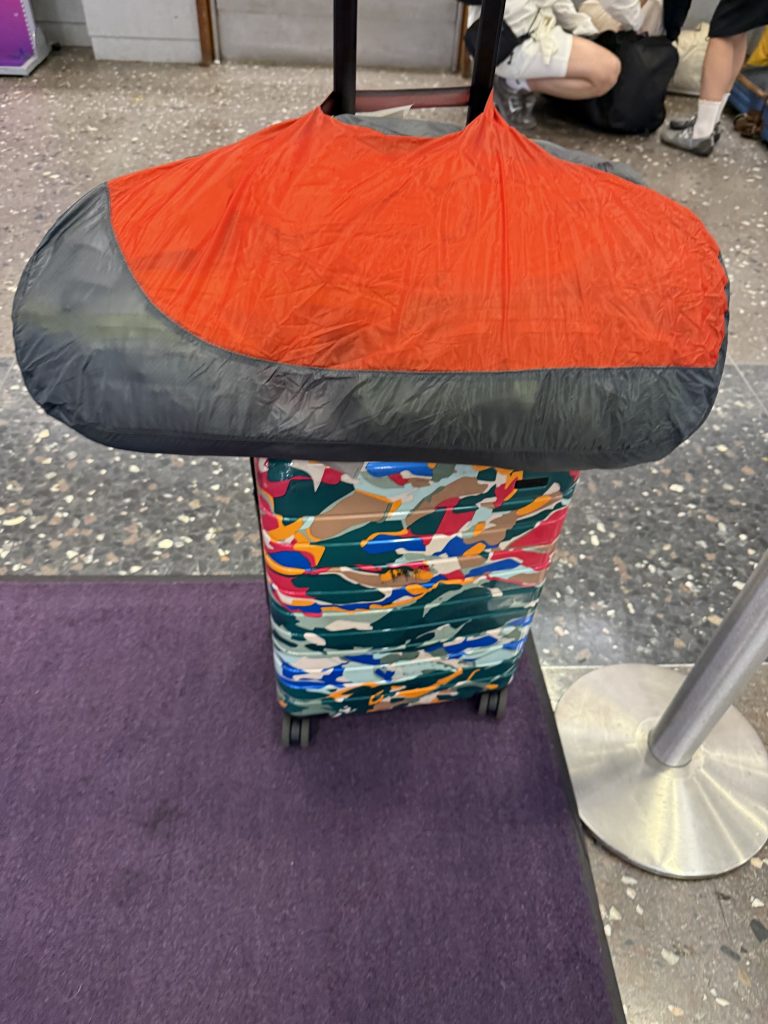
You might be wondering: how do you manage luggage for a multi-week international trip? Luckily I have a 431 packing system that works just about anywhere. It’s built around three items each of four essential categories: base layers, top layers, bottoms, and shoes. Then add one each of the essentials – a travel outfit, pajamas, a jacket, and a swimsuit. For a three-week trip, I pack for one week and rotate. Everything fits in one bag – packing cubes are non-negotiable. Want the full breakdown? I’ve got a complete guide to the 4-3-1 system here.
Color coordinating is key so you can mix and match your outfits. If your trip spans seasons or climates – like mine did from Sicily’s heat to Northern Italy’s cooler weather – layer your clothing and pack one warm layer even for summer trips.
When to DIY vs. When to Hire a Travel Advisor
I’ve laid out my entire framework – and some of you are still wondering how to plan a multi-week international trip. You may be thinking ‘this sounds amazing!’ while others are thinking ‘this sounds exhausting.’ Both reactions are valid. So which approach is right for you?.
DIY Makes Sense When:
- You genuinely enjoy research and planning
- You have time to invest (20-40+ hours for multi-week trips)
- Your itinerary is straightforward
- You’re traveling budget/backpacker style
- You’re flexible with accommodations and timing
I still DIY most of my personal trips because I’m a travel geek who loves the planning process.
A Travel Advisor Makes Sense When:

- Complex multi-country routing
- Special occasions (honeymoons, milestone birthdays, anniversaries)
- Limited planning time
- You want perks and upgrades (Virtuoso benefits)
- Group travel coordination
- You value peace of mind and backup support
As both a traveler who DIYs and an advisor who helps clients, I can tell you there’s no ‘right’ answer. The question is: what do YOU value? Time? Control? Perks? Support? Whatever it is you’re looking for, there’s a right fit for you.
The Hybrid Approach
Some clients hire me to do everything soup to nuts for a seamless experience. There are others who prefer a hybrid approach. For example, some clients prefer I plan the itinerary, and they do the booking. Others hire me to book their transportation and hotels, then handle their own daily activities and dining – these are all perfectly valid approaches. If you’re curious about how working with a travel advisor actually works, or want help planning your multi-week adventure, you can learn more about my services here.
Final Thoughts: The Planning Is Part of the Adventure
Look, planning a multi-week international trip is work, I won’t sugarcoat it. But for me, spreading out the map, researching neighborhoods, imagining what I’ll see and eat and experience? That’s part of the joy. The anticipation builds excitement.

Whether you use this framework to plan it yourself or work with someone like me to handle the heavy lifting, the important thing is that you GO. Multi-week trips change you in ways weekend getaways can’t. Give yourself the gift of time to truly experience a place.
Need help bringing your multi-week adventure to life? Let’s chat about making it happen.
Wherever you go, however you get there, I hope you have a trip to remember.
Happy travels (and happy planning), kindreds!
RELATED POSTS
Want examples of multi-week international trips?
- I spent 18 days traveling through Japan. Take a look at my complete Japan Itinerary for first-timers
- My mom, her cousin and I had a wonderful 16-day trip in Northern Italy. Read about our travels and see our ideal itinerary here: Northern Italy Family Girls Trip
- You can do multi-week international trips while traveling solo. If you’re nervous about going it alone, take a look at How to Start Traveling Solo
- Wondering if you should work with a travel advisor for travel solo? Here’s how to decide
- If you decide to work with a travel advisor, here’s how to choose one that’s right for you
- Still not ready to do it on your own? Consider planning a Girl’s Trip or joining a Group – read all the benefits of doing that here
- Only have a week to spare? Here’s how to plan your week-long international trip
- Ready to plan? Take a look at my 2026 planning framework in How to Plan Your Best Travel Year
- My 431 packing system will help make sure you bring only what you need – get your free guide here
HELPFUL LINKS
Ready to book? Here are my go-to resources for flights, packing, planning, and staying connected:
- Work With Me
- Need help planning your 2026 travel? Contact me here for personalized itinerary assistance!
- Want more information on the benefits of using a travel advisor? Learn more here
- Learn more about my Virtuoso affiliation here
- DIY Planning Resources
- Google Flights – Explore Destinations – For finding flexible date pricing across destinations
- Weather Atlas – Historical weather data by destination and month
- TripAdvisor Forums – Real traveler experiences by season/month
- Visa and Entry Information – information for US Citizens traveling to different countries
- Travel Insurance – Contact me for a quote.
- Looking for Travel Inspiration? Follow me and check out my boards on Pinterest